
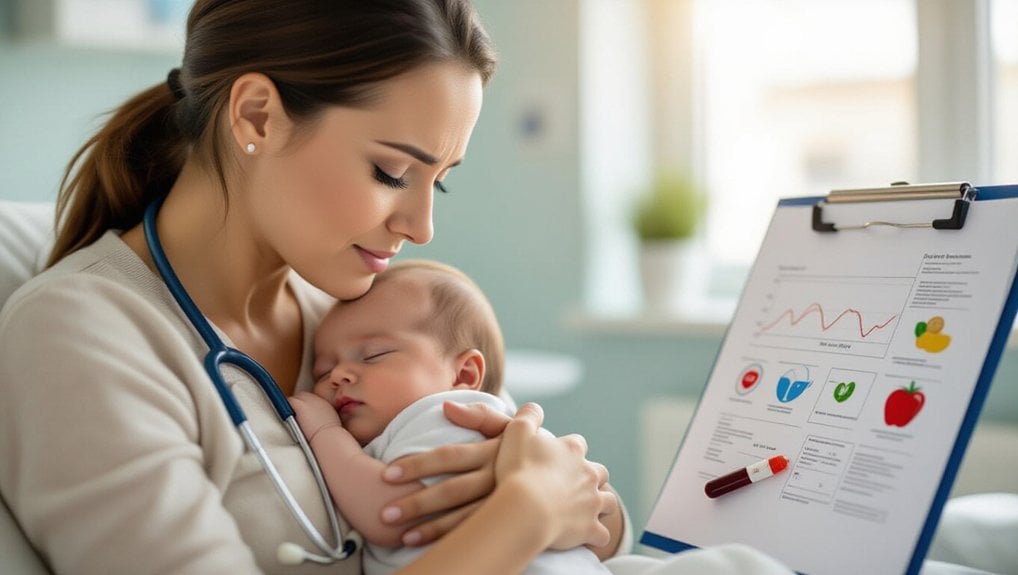


Iron deficiency anemia in infants primarily arises from inadequate dietary iron, especially after six months, and rapid growth spurts that deplete iron reserves. Symptoms include pale skin, irritability, fatigue, and a rapid heartbeat. Diagnosis often involves a hemoglobin blood test around 12 months, while treatment typically includes iron supplements and iron-rich foods. To prevent anemia, start iron supplements at four months and introduce iron-fortified cereals and foods after six months. Discover more about maintaining your infant's health.
Key Takeaways
- Iron deficiency anemia in babies is often caused by insufficient dietary iron during rapid growth phases after six months.
- Symptoms include pale skin, irritability, fatigue, rapid heartbeat, and pica, indicating low hemoglobin levels.
- Diagnosis typically involves a hemoglobin blood test at the 12-month checkup, especially if symptoms are present.
- Treatment usually consists of iron supplements and introducing iron-rich foods like pureed meats and fortified cereals by six months.
- Prevention includes daily iron supplements for breastfed infants from four months and avoiding cow's milk until after 12 months.
What Causes Iron Deficiency Anemia in Babies?
Iron deficiency anemia in infants primarily arises from insufficient dietary iron consumption, particularly when solid foods introduced after six months lack adequate iron content.
Full-term infants typically have sufficient iron stores from pregnancy for the first 4-6 months. Nonetheless, these stores deplete quickly, especially during rapid growth spurts, making dietary iron intake vital.
Premature infants face a higher risk of iron deficiency anemia due to having lower iron stores at birth.
Moreover, excessive cow's milk consumption in infants under 12 months can obstruct iron absorption and may lead to gastrointestinal bleeding, further exacerbating iron deficiency.
It's essential to monitor your baby's iron intake during this critical period to prevent deficiencies.
Ensuring a balanced introduction of iron-rich solid foods is fundamental for supporting your infant's growth and development, as proper iron levels are necessary for overall health and well-being.
Symptoms of Iron Deficiency Anemia in Infants
Many parents may not initially identify the symptoms of iron deficiency anemia in infants, but being aware of them is vital for early intervention. Common symptoms include pale skin, increased fussiness, and excessive fatigue. You might also notice a rapid heartbeat or your baby showing pica, a craving for non-food items.
Here's a quick overview of some symptoms to watch for:
| Symptom | Description | Potential Consequence |
|---|---|---|
| Pale Skin | Noticeable lightening of skin tone | Indicates low hemoglobin levels |
| Fussiness | Increased irritability or restlessness | Can affect feeding and sleep |
| Fatigue | Lack of energy or excessive sleepiness | May lead to developmental delays |
| Rapid Heartbeat | Raised heart rate | Can progress to heart failure |
Regular screening for iron deficiency anemia is critical, especially during the 12-month check-up, to identify these symptoms early and prevent complications.
How Is Iron Deficiency Anemia Diagnosed in Babies?

How can you tell if your baby has iron deficiency anemia? Diagnosing this condition typically starts with a hemoglobin blood test, recommended by pediatricians during the 12-month checkup.
If the screening test shows low hemoglobin levels, further diagnostic testing, such as a complete blood count (CBC) and iron panel, helps assess iron levels and red blood cell production. Symptoms of anemia, including pale skin, irritability, poor feeding, and lethargy, may prompt your pediatrician to investigate further.
Full-term infants usually have sufficient iron stores for the first 4-6 months, but as dietary iron intake becomes fundamental, screening becomes vital. Your pediatrician will also evaluate factors like rapid growth or feeding problems to determine if additional blood tests for anemia are needed.
Early detection is crucial to ensuring your baby’s health and preventing complications related to iron deficiency.
Treatment Options for Iron Deficiency Anemia
Once you've confirmed a diagnosis of iron deficiency anemia in your baby, treatment options become the focus.
For infants, treatment typically involves iron supplements, which can be administered as drops or liquid formulations. If your baby is exclusively or partially breastfed, a daily iron supplement is recommended starting at 4 months to prevent deficiency.
Once babies are ready for solids around 6 months, introduce iron-rich foods, such as pureed meats and iron-fortified cereals.
Formula-fed infants usually don’t need additional iron supplements since their formulas are fortified.
It’s essential to monitor iron levels through follow-up visits to verify the effectiveness of the treatment and adjust supplementation as necessary.
Keep an eye out for symptoms of iron deficiency, and always consult your healthcare professional for tailored advice and recommendations regarding your baby’s specific needs.
This proactive approach can help guarantee your baby’s healthy growth and development.
Prevention Strategies for Iron Deficiency Anemia in Infants

Preventing iron deficiency anemia in infants requires a proactive approach to nutrition and regular health monitoring. To guarantee your baby maintains adequate iron levels, consider the following prevention strategies:
-
Start daily iron supplements at 4 months for infants who are partially or exclusively breastfed, as breast milk is low in iron.
-
Introduce iron-fortified cereals when your infant begins solid foods around 6 months to improve dietary iron intake.
-
Avoid cow’s milk until your baby is over 12 months, as it can interfere with iron absorption and may lead to gastrointestinal bleeding.
Incorporate iron-rich foods like pureed meats, legumes, and dark leafy greens into your infant's diet after 6 months.
Regular pediatric check-ups and screening for iron deficiency anemia at 12 months are crucial for early detection of any symptoms and to prevent complications.
Prioritizing these strategies will help safeguard your infant's health.
Frequently Asked Questions
What Causes Iron Deficiency Anemia in Infants?
Iron deficiency anemia in infants arises from several factors.
While breastfeeding offers important nutrients, it may lack sufficient iron after six months, making solid foods necessary. Parents need to be aware of dietary deficiencies, especially during growth spurts when iron needs increase.
Premature infants face heightened risks due to lower iron reserves, and excessive cow's milk can lead to blood loss and digestive issues.
Choosing the right formula and iron sources is vital for prevention.
Can Anemia Cause Diarrhea?
Anemia itself doesn’t directly cause diarrhea, but certain anemia symptoms can lead to digestive issues.
For example, if iron supplements disrupt your infant’s digestion, you might notice diarrhea types like loose stools.
Furthermore, poor iron absorption can affect nutrition, potentially impacting your baby’s overall health.
Be cautious of dehydration risks if diarrhea persists.
Always seek medical advice to address any pediatric concerns regarding your infant's health and nutrition.
Can Iron Cause a Rash?
Yes, iron can cause a rash, especially when taking iron supplementation.
You might notice skin irritation or hives due to allergic reactions to the supplement varieties or dosages.
While iron-rich foods typically don’t trigger rashes, they can help address nutritional deficiencies.
If you observe a rash, consult pediatric guidelines for rash treatment options and evaluate the iron supplementation side effects.
Always follow iron dosage recommendations to minimize risks.
Can Anemia Cause Fever?
Anemia itself doesn’t directly cause fever, but it may be linked to underlying conditions that do, like infections.
If you notice fever symptoms in your infant alongside signs of anemia, seek pediatric care quickly.
It’s vital to manage fever duration effectively while addressing both anemia diagnosis and infection signs.
Ensuring proper iron absorption and nutritional needs can support overall infant health, but medical guidance is important for appropriate fever management and treatment.
Conclusion
So, if you thought your baby’s charm could drown out the woes of iron deficiency anemia, think again! It's not just about adorable giggles and chubby cheeks. Keeping an eye on their iron intake isn't just a good idea; it’s crucial for their health and development. Remember, those tiny humans need more than just smiles and cuddles—they need iron too! Stay informed, take action, and guarantee your little one thrives, not just survives. Your pediatrician will thank you!