
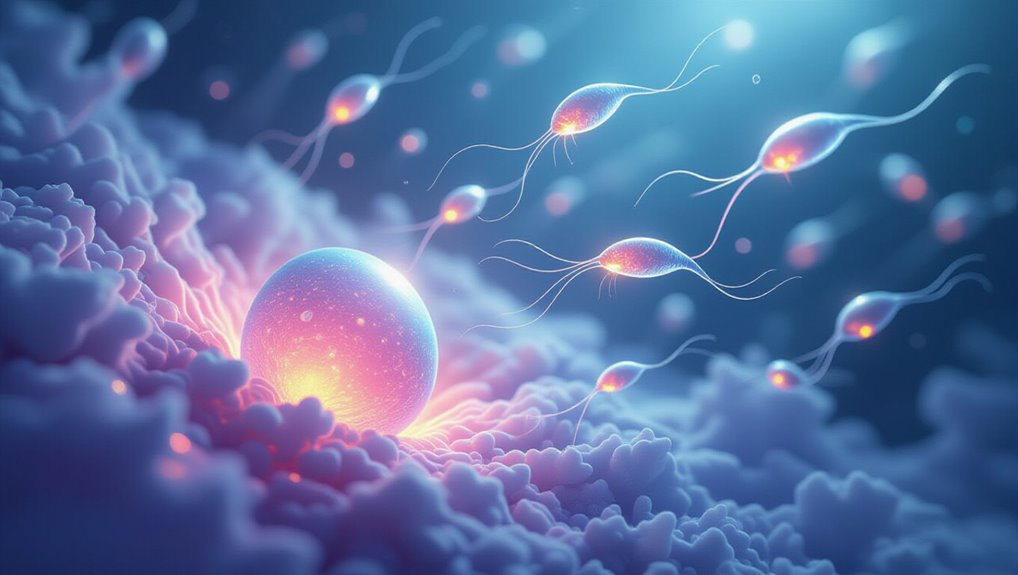

Sperm can survive inside your body for up to five days, typically reaching their peak viability during the fertile window. However, an egg remains viable for just 12 to 24 hours after ovulation. For successful fertilization, sperm must be present during this limited timeframe. Understanding these lifespans and their implications can greatly enhance your chances of conception. There’s more to discover about timing and factors that influence fertility, which can aid in your conception journey.
Key Takeaways
- Sperm can live up to five days in the female reproductive tract during the fertile window.
- An egg is viable for 12 to 24 hours after ovulation.
- For successful fertilization, sperm must be present before or during the egg’s viability.
- Sperm quality and cervical mucus impact sperm longevity and fertilization chances.
- Understanding these timeframes helps optimize conception efforts.
Lifespan of Sperm Inside the Female Body
When sperm enters the female reproductive system, its lifespan can vary greatly based on several factors. On average, sperm longevity is about three days, but during a woman’s fertile window, healthy sperm can survive up to five days.
The presence of cervical mucus plays an essential role in this process; it becomes thinner and slipperier during ovulation, enhancing sperm survival. Additionally, cervical crypts act as temporary storage for sperm, increasing their chances of reaching the egg for fertilization.
Factors like vaginal pH and the overall health of both partners markedly influence sperm viability. For couples trying to conceive, understanding these dynamics helps identify the best timing for intercourse, aligning with ovulation for maximum potential success.
Lifespan of an Egg After Ovulation

After ovulation, an egg remains viable for only about 12 to 24 hours, making timing essential for conception.
Factors such as hormonal balance and overall reproductive health can influence this lifespan.
Understanding this brief window helps you track your fertile days more effectively.
Egg Viability Duration
Understanding the lifespan of an egg after ovulation is essential for timing conception effectively. An egg is viable for about 12 to 24 hours post-ovulation, making this window critical.
Here are key points to reflect on:
- Fertilization Window: The egg can only be fertilized within 24 hours of release.
- Sperm Timing: Sperm must be present in the female reproductive tract before ovulation for successful fertilization.
- Egg Health: Maintaining good egg health can maximize chances of conception during this limited timeframe.
- Ovulation Signs: Recognizing ovulation signs helps track your fertile window more accurately.
Factors Affecting Lifespan
The lifespan of an egg after ovulation is influenced by several factors that can impact its viability and the chances of successful fertilization. Typically, an egg survives for about 12 to 24 hours post-ovulation.
During this critical timeframe, egg health is paramount; any hormonal imbalances or health issues can shorten its lifespan. Additionally, the quality of sperm also plays a significant role.
While sperm can live up to five days in the female reproductive system, only healthy sperm can effectively fertilize the egg within its limited lifespan. If fertilization doesn’t occur in this narrow window, the egg disintegrates and is either absorbed by the body or expelled during menstruation, emphasizing the importance of both egg health and sperm quality in conception.
Ovulation Timing Importance
Timing is essential when it comes to conception, as an egg’s viability lasts only about 12 to 24 hours after ovulation.
To maximize your chances of pregnancy, consider these conception tips:
- Track Ovulation: Use methods like basal body temperature and cervical mucus changes to identify peak fertility.
- Know Your Window: The fertile window spans roughly five days before ovulation to the day of ovulation.
- Sperm Timing: Aim for sperm to be present in the fallopian tube at the time of ovulation for ideal chances.
- Intercourse Timing: Intercourse within five days before ovulation aligns sperm presence with the egg’s brief viability.
The Fertile Window: Timing for Conception

Understanding your fertile window is essential for maximizing your chances of conception.
This six-day period, which begins five days before ovulation, allows sperm to meet the egg during its brief viability of 12 to 24 hours.
Timing intercourse within this window, especially when tracking ovulation signs, can greatly enhance your likelihood of becoming pregnant.
Understanding Fertile Window
Knowing when your fertile window occurs is essential for maximizing your chances of conception. This window spans about five days before ovulation and includes the day of ovulation itself.
Here are key points to enhance your fertility awareness through ovulation tracking:
- An egg survives 12 to 24 hours post-ovulation, making timing significant.
- Sperm can last 3 to 5 days in the female reproductive tract, so having sperm ready is important.
- The highest conception rates occur during the fertile window, ranging from 10% to 33%.
- Utilize methods like basal body temperature monitoring and cervical mucus observation to identify your fertile days.
Understanding these aspects helps you optimize your chances and feel more connected in your journey toward conception.
Timing Intercourse for Conception
When should you schedule intercourse to maximize your chances of conception? The fertile window spans about five days before ovulation and the day of ovulation itself.
To optimize your timing strategies, aim to have intercourse no more than five days prior to ovulation. This guarantees sperm are present in the fallopian tube when the egg is released, which is viable for fertilization for just 12 to 24 hours.
Since sperm can survive for 3 to 5 days, timing is essential. Utilizing conception techniques like tracking your basal body temperature and observing changes in cervical mucus can help pinpoint your most fertile days.
This knowledge greatly enhances your chances of achieving pregnancy, creating a sense of belonging in your journey towards parenthood.
Journey of Sperm to the Egg

As sperm commence on their journey to the egg, they face numerous challenges along the way. Only a fraction of the 300 million sperm released can navigate the obstacles to reach the egg. Here’s what they encounter:
- Vaginal Environment: The acidic pH initially hinders their movement.
- Cervical Mucus: During ovulation, it becomes more watery, allowing about 10,000 sperm through.
- Uterine Contractions: These help propel sperm toward the fallopian tubes.
- Distance: They must swim approximately 15 to 18 cm to reach the egg.
Typically, sperm reach the egg within 15 to 45 minutes, yet only about 200 will make it to the destination.
Understanding this egg journey highlights the incredible resilience of sperm.
Factors Influencing Sperm Survival

Although various factors influence sperm survival, the vaginal environment plays an essential role in determining their longevity and motility. For instance, a less acidic vaginal pH enhances sperm health, allowing them to thrive longer.
During ovulation, the cervical mucus changes to a thinner, more watery consistency, which greatly improves sperm viability and aids their movement toward the egg.
Additionally, overall sperm health is affected by lifestyle choices such as diet, exercise, and exposure to environmental toxins. Infections or hormonal imbalances within the female reproductive system can hinder sperm survival and fertilization potential.
Timing is also vital; sperm have a higher chance of reaching the egg when intercourse occurs during the fertile window, typically five days before ovulation.
Implantation Process and Timeline

After sperm successfully fertilizes the egg, the journey isn’t over; the next key phase is implantation. This process is essential for establishing pregnancy, as it marks the blastocyst’s attachment to the uterine wall.
Here’s the typical implantation timeline you should know:
- Fertilization: The egg and sperm unite, forming a zygote.
- Blastocyst Formation: Over 5 to 6 days, the zygote develops into a blastocyst.
- Uterine Entry: The blastocyst enters the uterine cavity, preparing for attachment.
- Implantation: This usually occurs 6 to 10 days post-fertilization, with successful implantation triggering hCG production, essential for implantation success and supporting your pregnancy journey.
Pregnancy Odds Based on Age

Understanding pregnancy odds based on age is essential for those planning to conceive, since fertility greatly declines as women get older. At age 30, you have about a 20% monthly chance of conception, but this drops to around 5% by age 40.
Age impacts fertility markedly due to changes in egg quality and quantity. Statistics show that approximately 58% of couples aged 21-45 become pregnant within six months of trying, while around 75% achieve pregnancy after a year.
As you approach your late 30s and early 40s, it’s vital to enhance your fertility awareness. Recognizing how age affects your reproductive health can help you make informed decisions about family planning and timing.
Methods to Enhance Fertility and Conception

To increase your chances of conception, it’s crucial to adopt effective methods that enhance fertility. Here are some strategies you can implement:
- Track Ovulation: Monitor your basal body temperature and cervical mucus to identify your most fertile days.
- Use Ovulation Kits: Invest in ovulation predictor kits to accurately detect when you’re about to ovulate.
- Engage in Regular Intercourse**: Aim for intercourse during your fertile window, particularly the two days before ovulation.
- Prioritize Fertility Nutrition and Stress Management: Incorporate a balanced diet rich in vitamins and minerals, and practice stress-reduction techniques to create a supportive environment for conception.
Frequently Asked Questions
Can Sperm Survive Outside the Body?
Sperm can’t survive long outside the body; under ideal conditions, their viability lasts about 15 to 30 minutes. External factors like warmth and moisture greatly affect their survival, so keep that in mind.
How Does Age Affect Egg Viability?
As you age, your egg quality plummets like a meteor crashing to Earth. Age factors lead to chromosomal issues and thicker shells, making it tougher for viable eggs to get fertilized, considerably lowering your fertility.
What Role Does Cervical Mucus Play in Sperm Survival?
Cervical mucus plays an essential role in sperm transport by becoming thinner and more slippery during ovulation. This changes enhance sperm survival, guiding them toward the egg and greatly increasing your chances of successful conception.
Can Lifestyle Changes Impact Sperm Lifespan?
Absolutely, lifestyle changes can enhance sperm lifespan. For instance, a man who switches to a balanced diet and exercises regularly can greatly improve his sperm health, increasing motility and overall fertility potential. It’s all interconnected!
Is There a Way to Test Egg Quality?
Yes, you can test egg quality through hormone testing, like FSH and AMH levels, and by considering egg freezing options. These methods help assess your ovarian reserve and overall reproductive health effectively.
Conclusion
Understanding the lifespans of sperm and eggs is essential for maximizing your chances of conception. Sperm can survive in the female body for up to five days, while an egg only lasts about 12 to 24 hours after ovulation. Think of it as a race against time; knowing your fertile window can make all the difference. By considering factors that influence survival and exploring fertility-enhancing methods, you can greatly improve your odds of achieving pregnancy.