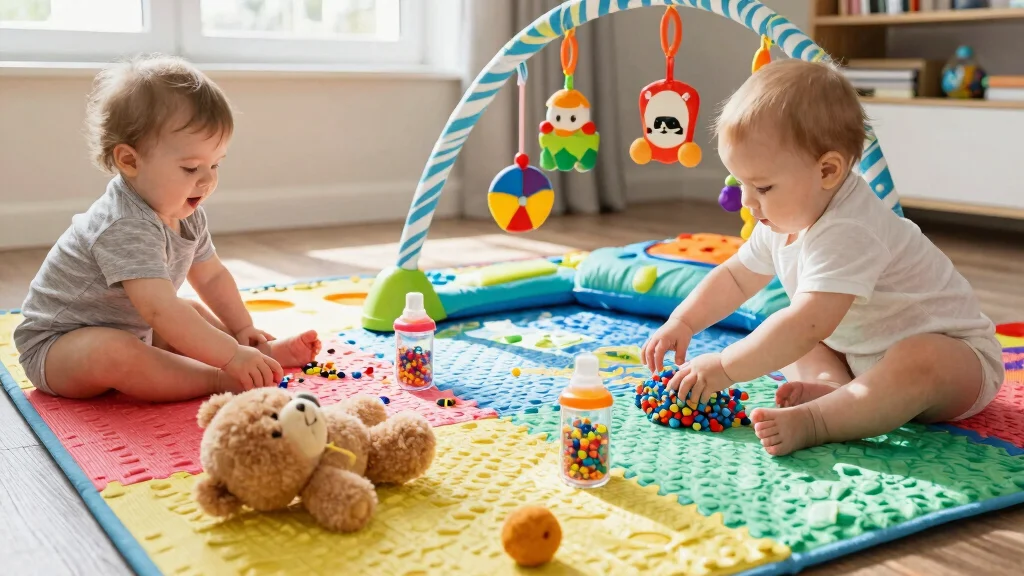

If you’re a parent, grandparent, or caregiver, you know how important it is to keep little ones engaged and happy. This blog post was created to share some fun and educational activities that not only bring joy but also support your baby’s development. Sensory play is a fantastic way to help your baby explore the world around them. It sparks curiosity, encourages exploration, and lays a foundation for learning.
If you’re looking for creative ways to entertain and stimulate your baby, then you’re in the right place! This list is crafted just for you, whether you’re a first-time parent or a seasoned pro seeking fresh ideas. You want activities that are safe, simple, and sure to bring lots of giggles, right? Well, you’re in for a treat! I’ve gathered 12 amazing sensory play activities that will delight your little one, with #5 being an absolute crowd-pleaser.
By diving into these activities, you’ll gain a variety of ideas that are easy to set up and perfect for your baby’s developmental milestones. Each activity is designed to engage their senses while promoting physical and cognitive skills. Get ready to enjoy bonding moments filled with laughter and discovery!
Key Takeaways
– Sensory play is essential for baby development, helping to stimulate their senses and encourage exploration.
– The activities included are safe, fun, and easy to set up, making them perfect for busy parents.
– Engaging in these activities can strengthen the bond between you and your baby while creating joyful memories.
– Each activity supports different aspects of development, including fine motor skills, cognitive growth, and sensory awareness.
– You can adapt these sensory play ideas to fit your baby’s age and interests, ensuring continued engagement and fun.
1. Rainbow Rice Sensory Bin
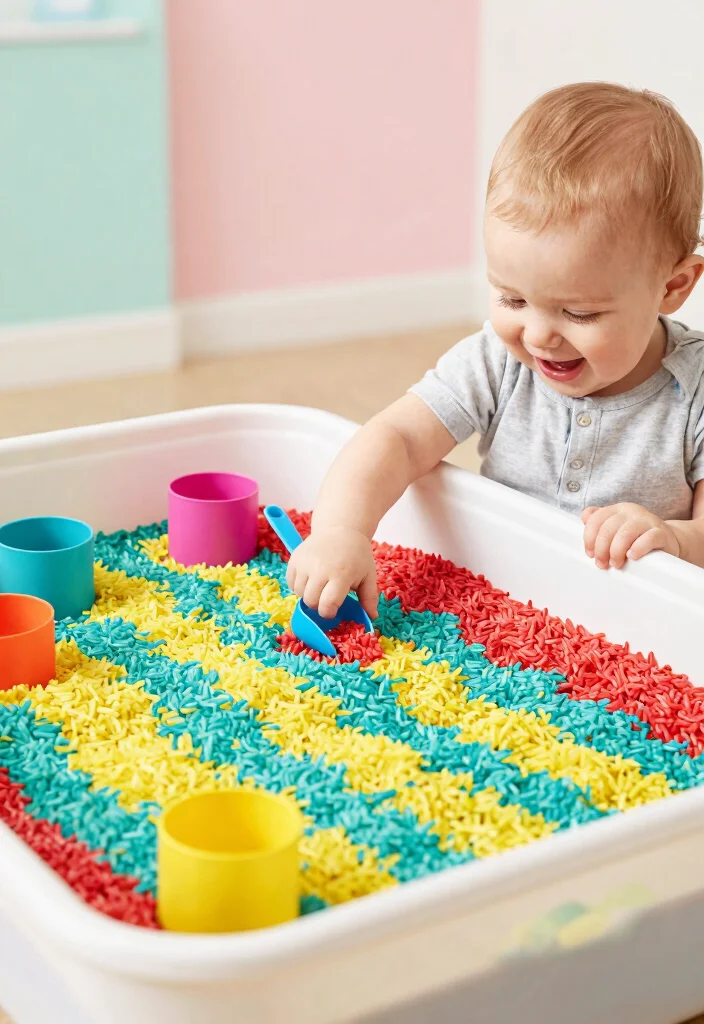
Turn plain rice into a vibrant and engaging sensory experience! Making rainbow rice is not only fun but also simple, allowing your baby to enjoy a colorful world of tactile exploration. It’s perfect for scooping and pouring, enhancing their motor skills while they play among various textures and colors. To create this magical sensory bin, divide uncooked rice into bowls and add a few drops of food coloring. Let it dry, and you’ve crafted a captivating playtime activity that sparks joy and curiosity.As your baby interacts with the rice, they’ll improve their hand movements and develop creativity through play. This engaging activity also stimulates their visual senses with its bright and cheerful colors.Key ingredients for this fun project:
– 2 cups uncooked rice
– Food coloring (various colors)
– Baking sheet
Instructions to follow:
1. Divide the rice into small bowls.
2. Add a few drops of food coloring to each bowl and mix well.
3. Spread the colored rice onto a baking sheet to dry for a few hours.
4. Once dry, transfer it into a sensory bin or a shallow tray for play.
Tips:
– Introduce measuring cups and spoons for added fun.
– Supervise closely to prevent baby from putting rice in their mouth.
This rainbow rice bin promises endless entertainment, allowing your baby to explore the wonders of color and texture!
📹 Related Video: DIY Rainbow Rice Sensory Bins!
2. Water Play Fun
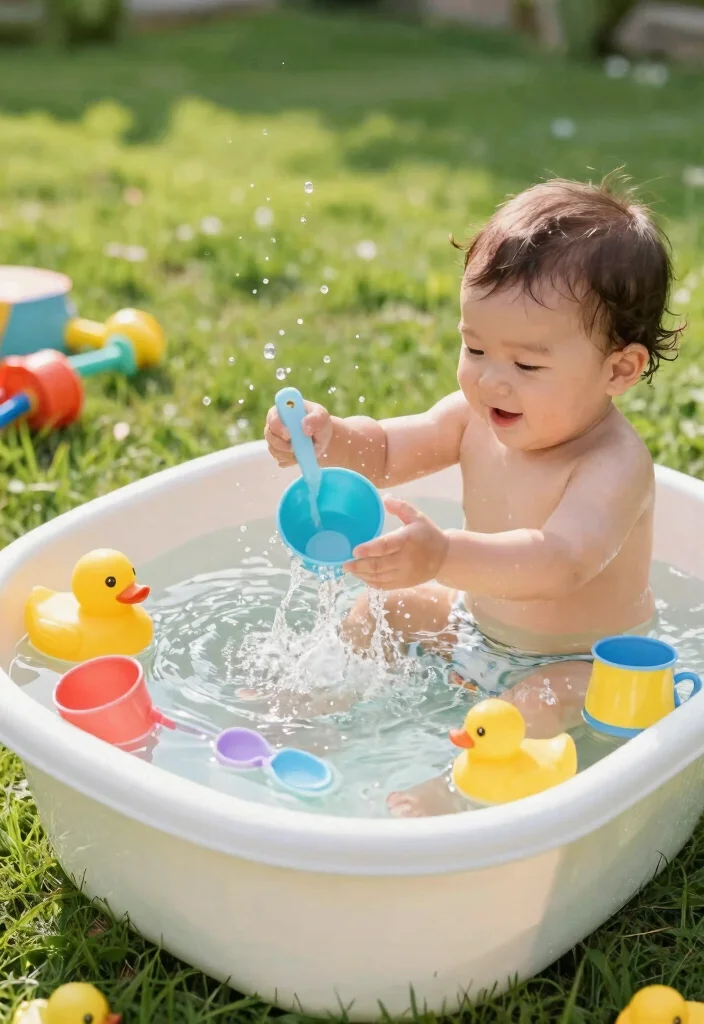
Dive into a world of excitement with water play! Fill a shallow container with warm water and add cups, spoons, and even some rubber ducks for extra fun. Your baby will love splashing around, pouring, and scooping, all while discovering the soothing sensations of water. This engaging activity not only entertains but also enhances their hand-eye coordination and fine motor skills.To elevate the fun, consider adding bubble bath solution for some frothy bubbles or incorporating natural elements like leaves and flowers for a sensory twist. The contrast of cool water against warm air creates a delightful sensory experience!Key items to gather:
– A shallow container (like a plastic tub)
– Warm water
– Cups, spoons, or small toys
Instructions to get started:
1. Fill the container with warm water, ensuring it’s not too hot.
2. Add cups, spoons, and other toys for your baby to explore.
3. Supervise closely as they play and enjoy!
Tips:
– Use a waterproof mat to make cleanup easier.
– Perfect for a warm day outdoors!
Water play brings pure joy, making it an ideal sensory activity for your little one!
Water Play Fun
Editor’s Choice




3. Sensory Bottles
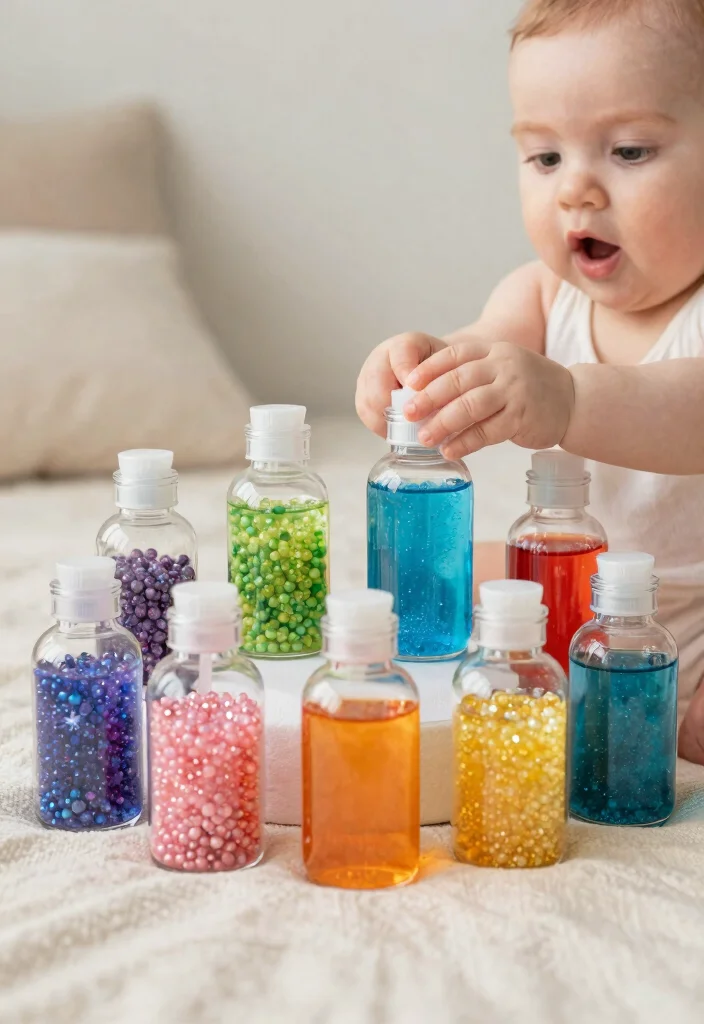
Capture your baby’s attention with mesmerizing sensory bottles! These simple creations can be filled with a variety of materials like glitter, beads, or even a mix of water and oil. Fill a plastic bottle with your chosen items, seal it tightly, and watch as your baby shakes and rolls it to explore different sounds and visuals. This engaging activity promotes visual tracking and focus.Consider making themed bottles to reflect holidays or seasons, adding an educational twist to the fun. The swirling movements inside will enchant your little one, providing endless entertainment!Materials needed:
– Empty plastic bottles with tight-sealing caps
– Water, glitter, beads, or small toys
Steps to create:
1. Fill the bottle about 2/3 full with your base (water or oil).
2. Add glitter, beads, or other sensory items as desired.
3. Seal the cap tightly and shake to mix the contents.
4. Present the sensory bottle to your baby!
Tips:
– Label each bottle with the sensory materials for educational purposes.
– Supervise closely to ensure the bottle stays intact.
Sensory bottles offer a calming activity that captivates and engages your baby’s senses beautifully!
4. Cloud Dough Creation
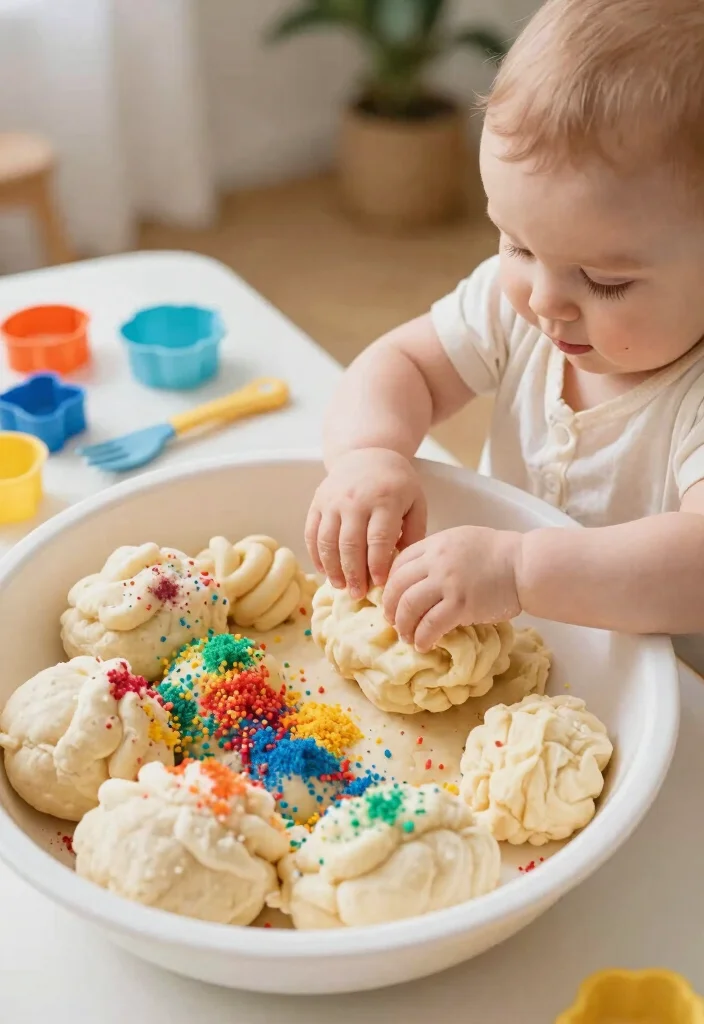
Experience the soft, fluffy delight of cloud dough! This wonderful sensory material is super easy to make with just two ingredients: flour and oil. Mix them together to create a delightful dough that your baby can squish, mold, and explore. Add a few drops of food coloring for an extra pop of color that will delight their senses!This activity fosters creativity and fine motor skills as your little one learns to manipulate the dough with their hands. Encourage them to create shapes or simply enjoy the unique, squishy texture as they play!Ingredients for this fluffy fun:
– 8 cups of flour
– 1 cup of vegetable oil
– Food coloring (optional)
Simple instructions to follow:
1. In a large bowl, mix flour and oil together until the mixture resembles fine crumbs.
2. Add food coloring and mix until the color is well distributed.
3. Transfer it to a sensory bin for your baby to explore.
Tips:
– Store this dough in an airtight container for future play.
– Supervise to prevent ingestion of the dough.
Cloud dough offers a delightful alternative to traditional play dough, and your baby will love its unique texture!
5. Giggle with Jell-O
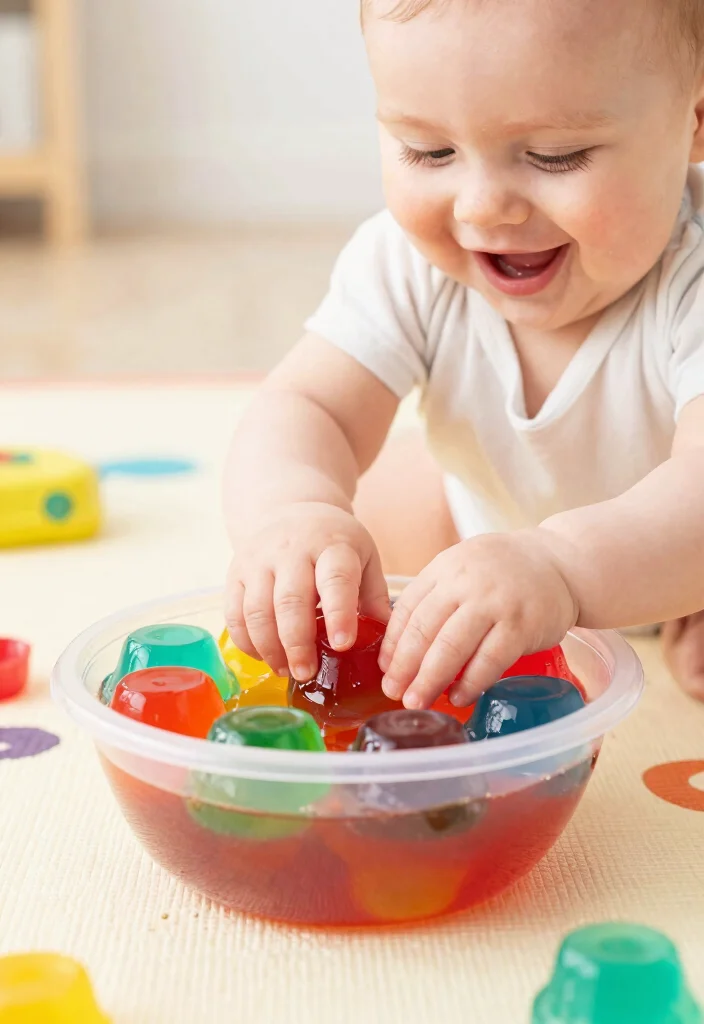
Get ready for giggles with this wobbly, jiggly Jell-O sensory play! Prepare a batch of Jell-O and let it set in a shallow container. Once ready, allow your baby to explore the squishy, jiggly texture using their hands. This tactile experience guarantees laughter and joy!The bright colors and fun texture not only stimulate their senses but also encourage playful experimentation. Since Jell-O is safe for babies to taste, they can enjoy exploring with all their senses while having a blast!Ingredients needed:
– 1 box of Jell-O mix
– 1 cup boiling water
– 1 cup cold water
Instructions to create this fun activity:
1. Dissolve Jell-O mix in boiling water, stirring until fully dissolved.
2. Add cold water and mix well.
3. Pour into a shallow container and refrigerate until set.
4. Once ready, let your baby explore it!
Tips:
– Use a highchair or mat to contain the mess!
– Jell-O wiggles and moves, making it an exciting experience.
This delightful sensory experience encourages exploration and sensory development, sure to spark laughter from your little one—an absolute must-try!
6. Nature Sensory Walk

Embrace the outdoors with a delightful nature sensory walk! On a sunny day, visit the park or your backyard, allowing your baby to discover various textures in nature. They can touch the grass, feel the rough bark of a tree, or play with leaves, promoting sensory exploration and physical movement.Bring along a small bag to collect interesting items like twigs, leaves, or stones. Discuss each find, describing textures and colors, which supports language development and curiosity!Tips:
– Ensure the area is safe and free from hazards.
– Bring a blanket for cozy outdoor play or a place to sit.
A nature sensory walk encourages a love for the outdoors while enhancing sensory skills, creating a wonderful bonding experience with your little one.
❝ Fun fact: A quick 10-minute nature sensory walk invites your baby to touch at least 5 textures—grass, bark, stones, leaves, and water. This simple activity boosts sensory play and language cues, turning outdoor time into focused, giggle-ready learning. ❞
You might also like
10 Creative Activities That’ll Supercharge Your Baby’s Cognitive Growth (You Won’t Believe #7!) – MomBlush
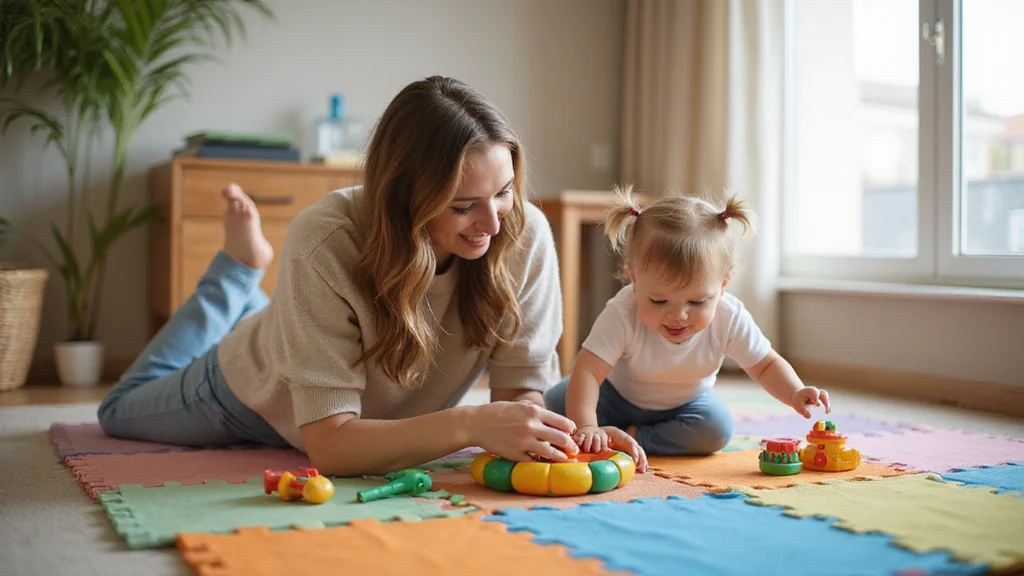
20 Interactive Playtime Activities for Babies That Strengthen Your Bond (Don’t Miss #12!) – MomBlush
How To Choose Sensory Play Activities for Your Baby
Selecting the right sensory play activities for your baby is essential for encouraging their development and sparking joy. Here are some key factors to consider:
1. Safety First
Always prioritize safety when choosing sensory play activities. Look for materials that are non-toxic and safe for babies, especially if they are likely to explore with their mouths. Avoid small objects that could pose a choking hazard. For example, if you’re considering a sensory bin, ensure that the contents are large enough to prevent accidental swallowing, and free from sharp edges or hazardous materials.
2. Age Appropriateness
Choose activities that are suitable for your baby’s age and developmental stage. Newborns benefit from high-contrast colors and gentle textures, while older babies can enjoy more complex activities that involve pouring or squeezing. If your baby is around six months old, activities like water play and sensory bottles can be very engaging. Always adapt the activity based on your child’s unique skills and interests.
3. Variety of Textures
Sensory play thrives on diverse textures, as this helps stimulate your baby’s senses. Look for activities that include soft, squishy, rough, and smooth materials. For instance, consider a sensory bin filled with rice, foam, or fabric scraps—all offering different tactile experiences. This variety not only keeps your baby interested but also aids in their fine motor skill development.
4. Easy Setup and Cleanup
Your time is valuable, so choose activities that are easy to prepare and clean up. Consider using a dedicated space for sensory play, such as a playmat or a large tray that confines messes to one area. Activities like edible finger paints or water play can be fun without requiring too much effort to set up. Planning ahead for cleanup can make sensory play a joyful experience for both you and your baby.
5. Engagement Level
Select activities that can keep your baby engaged. Look for options that allow for exploration and creativity. For example, creating sensory bottles can captivate your little one as they shake and watch the contents swirl. Choose activities that encourage active participation, as babies learn best through exploration and interaction.
6. Encouragement of Developmental Skills
Consider how the sensory play activities will benefit your baby’s development. Activities can help with motor skills, cognitive development, and even language acquisition. For instance, playing with musical instruments can enhance auditory skills and rhythm, while exploring nature on a sensory walk introduces new vocabulary and concepts. Always aim for activities that promote growth in various developmental areas.
Pro Tip: Keep a sensory play journal! Document what activities your baby enjoys most. This will help you customize future play sessions to their preferences, ensuring that you always offer exciting and engaging sensory experiences.
By taking these factors into account, you can create enriching sensory play sessions that will not only delight your baby but also support their development in meaningful ways. Sensory play is a wonderful journey of discovery for both you and your little one!
7. Sensory Storytime
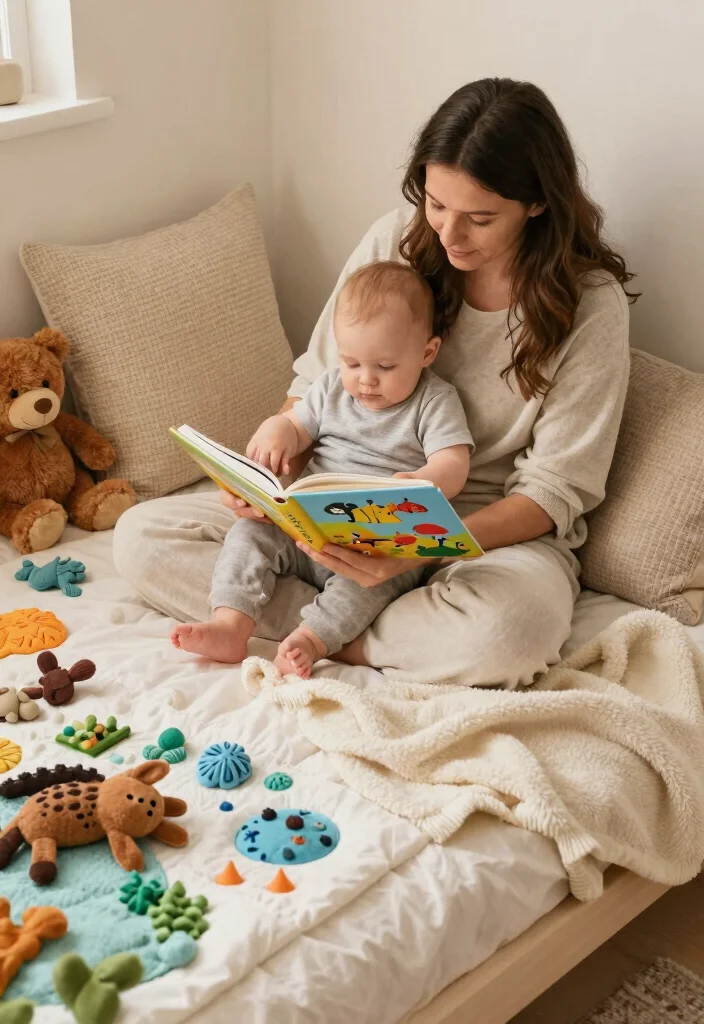
Combine the joy of storytelling with sensory play for double the fun! Pick a favorite book and gather sensory materials that match the story. If the tale features animals, have soft plush toys available for tactile exploration. If it’s about the ocean, create a sensory bin filled with sand and ocean-themed items.As you read, encourage your baby to touch and explore the related items, enhancing comprehension and engagement while bringing the story to life!Tips:
– Choose books with textures or flaps for additional sensory delight.
– Create a cozy reading corner with cushions and blankets to enhance the experience.
Sensory storytime not only entertains but also fosters a love for reading and creativity, laying the groundwork for language development.
Sensory Storytime
Editor’s Choice


8. Edible Finger Paints
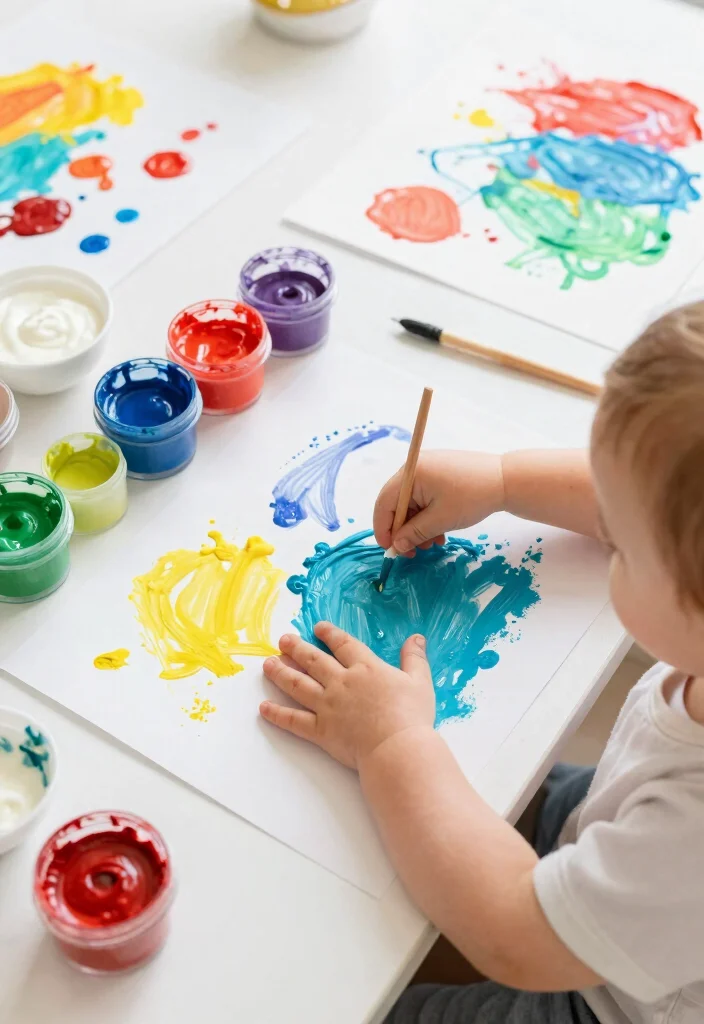
Create a mess-friendly art experience with edible finger paints! Using safe ingredients like yogurt mixed with food coloring, your baby can explore colors and textures without worries. Lay out some paper and encourage your little artist to express themselves through finger painting.This engaging activity supports fine motor skills and creativity, allowing them to discover colors and patterns while having a blast! Plus, the joy of painting with their fingers will create unforgettable memories.Ingredients for this creative fun:
– 1 cup plain yogurt
– Food coloring (various colors)
– Paper for painting
Instructions to bring this to life:
1. Divide yogurt into small bowls and add food coloring to create different colors.
2. Set out paper and encourage your baby to paint with their fingers!
Tips:
– Use a highchair or a large sheet of paper for easy cleanup.
– Supervise closely as they explore with taste and touch.
Edible finger paints provide a sensory experience and spark creativity, making art time an exciting adventure for you and your baby!
Fun fact: Using 2 ingredients—yogurt and food coloring—turns edible finger paints into a mess-friendly, safe sensory play activity. Your little artist will explore colors and textures, boosting fine motor skills while giggling through every swirl.
Edible Finger Paints
Editor’s Choice


9. Bubble Wrap Stomp
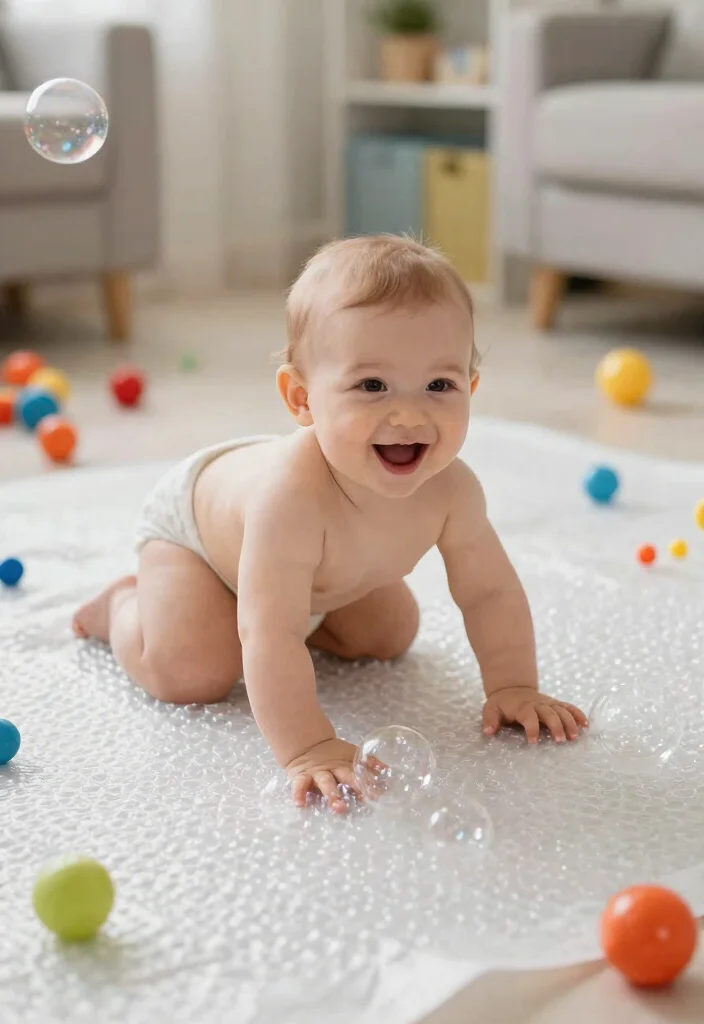
Bring the excitement indoors with a bubble wrap stomp! Lay out a large sheet of bubble wrap on the floor and let your baby crawl or walk over it. The satisfying sensation of popping bubbles is not just entertaining but also great for sensory development.As they step on the wrap, they’ll learn about cause and effect while enjoying themselves. It’s a simple yet thrilling way to improve motor skills and coordination!Key ingredients for this playful activity:
– Large sheet of bubble wrap
Instructions to follow:
1. Lay the bubble wrap flat on a safe, clean area.
2. Allow your baby to crawl or walk over the bubble wrap.
3. Encourage them to stomp and pop the bubbles!
Tips:
– Supervise closely to ensure safe play and prevent any mishaps.
– Experiment with different sizes and shapes of bubble wrap for added fun.
Bubble wrap stomp is guaranteed to bring laughter and joy into your sensory play routine!
10. Sensory Treasure Basket
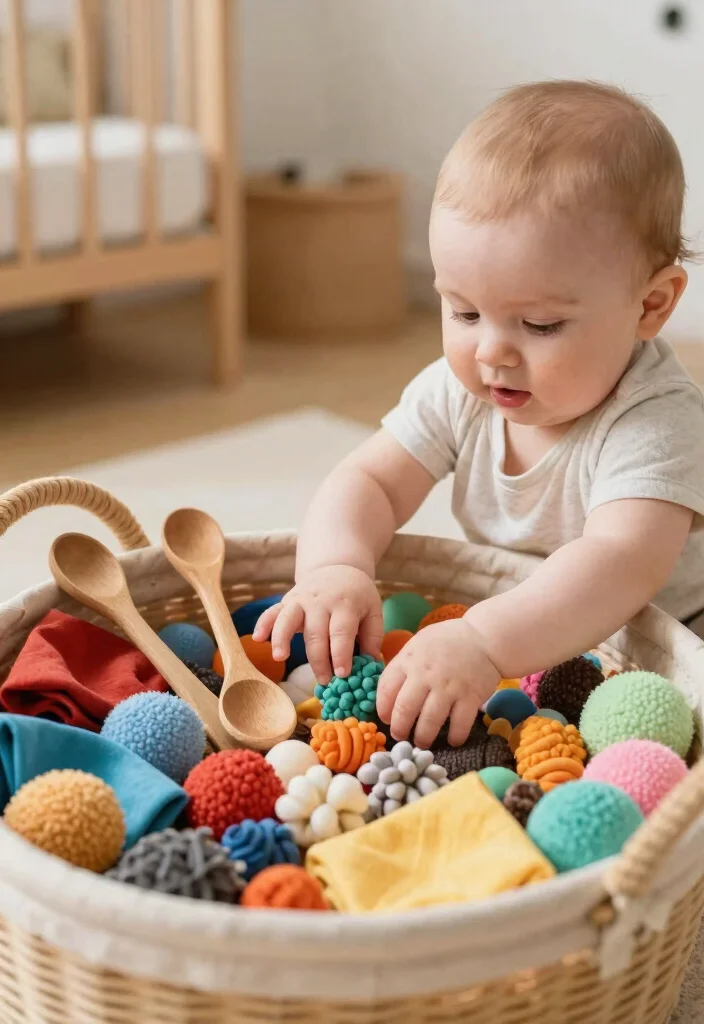
Create a sensory treasure basket filled with safe items for your baby to explore. Use everyday objects like wooden spoons, soft fabric pieces, and textured balls. Arrange the items in a basket and let your baby dig through, discovering different textures, shapes, and sizes.This activity promotes curiosity and fine motor skills as they learn to grasp and manipulate various objects. It also allows them to practice independent exploration in a safe environment!Key ingredients for this treasure basket:
– A basket or container
– Various safe items (toys, fabrics, utensils)
Instructions to create this basket:
1. Collect an assortment of safe items with different textures and shapes.
2. Place them in a basket for your baby to explore.
3. Supervise and guide them as they discover each item.
Tips:
– Rotate items regularly to keep the experience fresh and exciting.
– Discuss each item as they explore to enhance vocabulary learning.
A sensory treasure basket enriches your baby’s playtime with discovery and exploration!
You Might Also Like
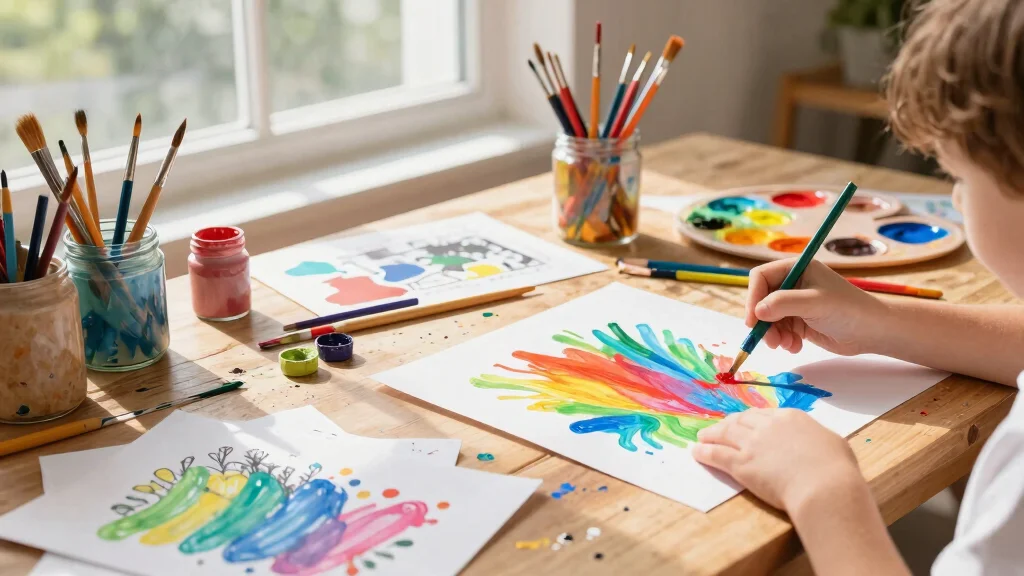
13 Art Projects That Promote Creative Thinking in Kids (Don’t Miss #9!) – MomBlush

10 Baby Led Weaning First Foods That Will Have Your Little One Asking for More! – MomBlush
11. Musical Instrument Exploration
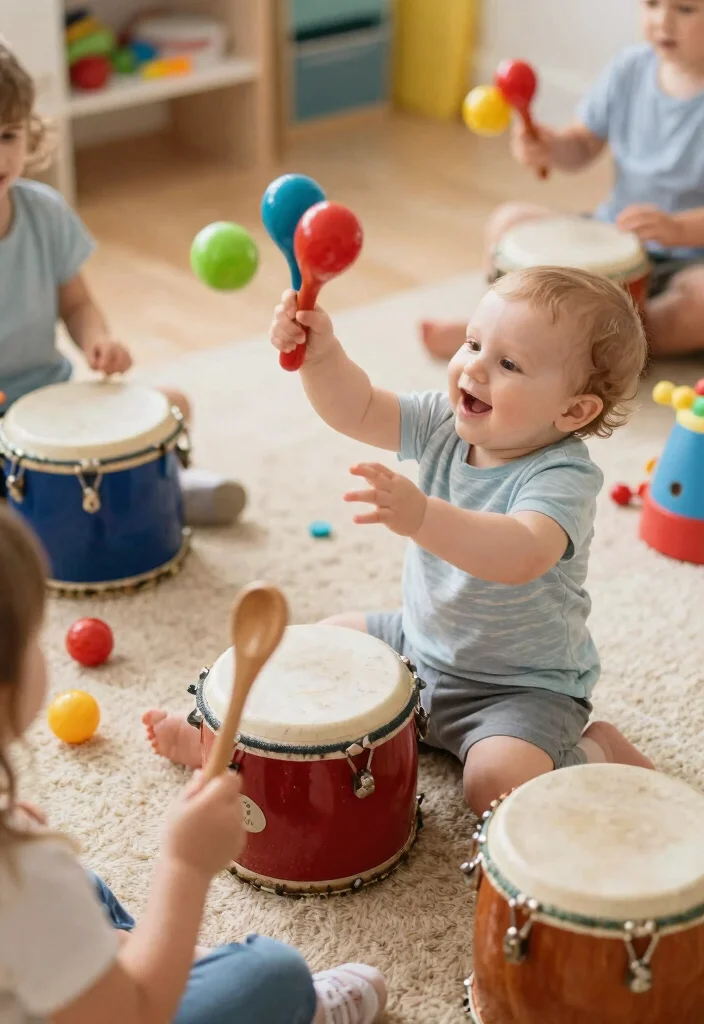
Introduce your baby to the delightful world of sound with simple musical instruments! Gather shakers, drums, or even handmade instruments like pots and wooden spoons. Allow your little one to explore different sounds and rhythms, fostering auditory development and creative expression.This engaging activity encourages movement as babies shake, bang, and dance to the sounds they create. Music is a wonderful way to bond and enjoy time together!Materials to gather:
– A selection of musical instruments (shakers, drums, etc.)
Instructions to follow:
1. Present the instruments to your baby, allowing them to explore freely.
2. Encourage them to create different sounds and move to the rhythm!
Tips:
– Incorporate songs or rhythms to engage them further.
– Join in the fun by dancing and singing along!
Musical instrument exploration entertains while laying the foundation for a lifelong love of music!
Musical instrument exploration turns playtime into listening practice dressed in pure fun. Your baby’s shake, tap, and dance are tiny steps toward sensory play mastery—and priceless bonding that makes sounds a shared adventure.
Musical Instrument Exploration
Editor’s Choice



12. Soft Sensory Books
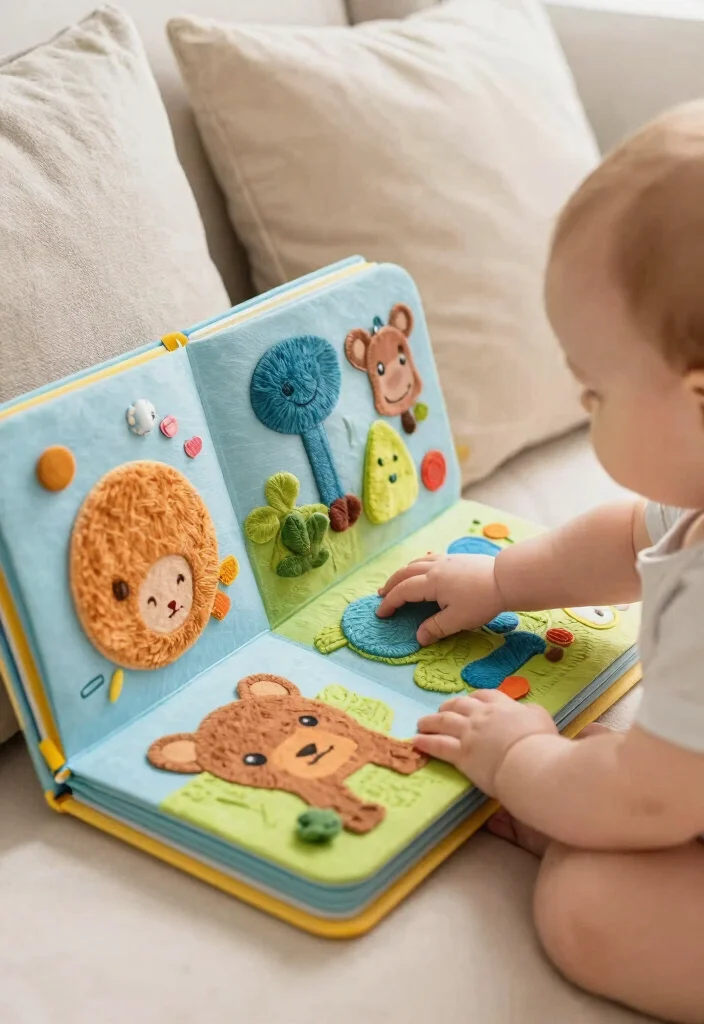
Engage your baby’s senses with delightful soft sensory books! These tactile books often feature various textures, flaps, and bright colors, making reading an interactive experience. Let your baby touch, feel, and explore the different textures as you read together, promoting sensory development and language skills.This activity not only encourages bonding through storytelling but also inspires exploration. Look for books featuring animals, nature, or everyday objects to provide an educational twist!Tips:
– Choose books with simple, high-contrast images and varied textures.
– Establish a daily reading routine to instill a love for books.
Soft sensory books beautifully combine storytelling with sensory exploration, making reading a fun and engaging activity!
Soft Sensory Books
Editor’s Choice


Conclusion
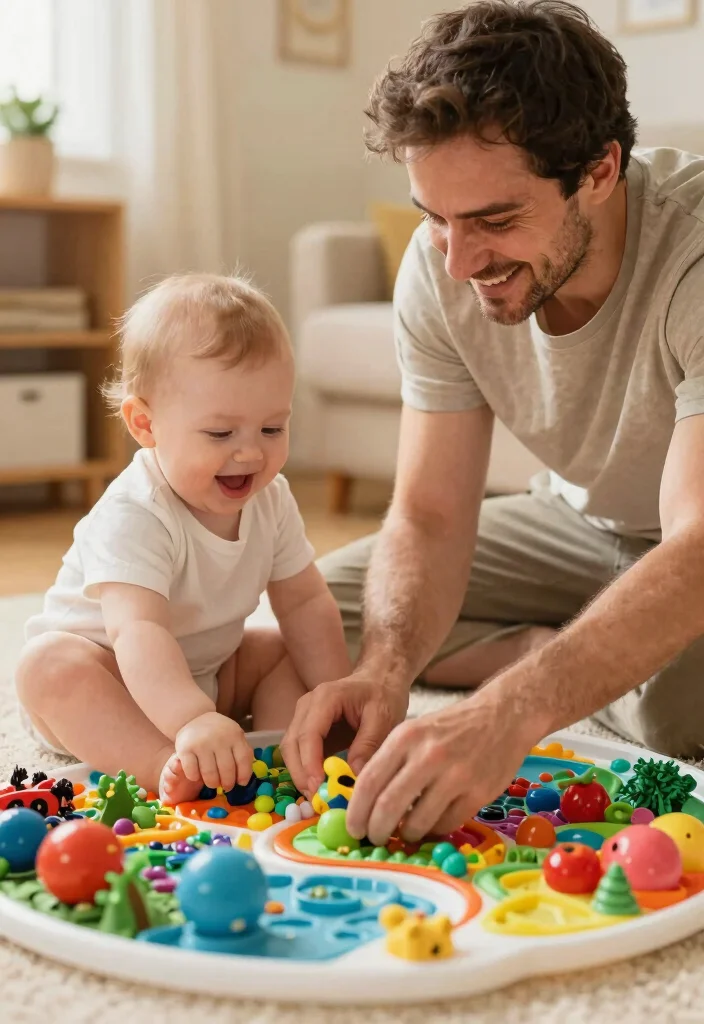
Sensory play offers a world of fun and learning for your baby, fostering essential skills that support their growth and development. Each activity encourages exploration, creativity, and bonding moments between you and your little one.
By incorporating these 12 sensory play ideas, you can fill your days with laughter, joy, and precious memories. So pick an activity, gather your supplies, and get ready for giggles and delight as your baby engages in sensory exploration!
Note: We aim to provide accurate product links, but some may occasionally expire or become unavailable. If this happens, please search directly on Amazon for the product or a suitable alternative.
This post contains Amazon affiliate links, meaning we may earn a small commission if you purchase through our links, at no extra cost to you.
Frequently Asked Questions
What are some easy sensory play activities for babies that boost development and are safe?
Sensory play is a wonderful way to support baby development while having fun. Start with simple activities like water play with warm water and cups, treasure baskets with safe household objects, sensory bags with gel or dry rice, and fabric exploration with different textures. Always supervise, use age-appropriate materials, and keep sessions short to match your baby’s attention span. By offering varied textures, you encourage exploration, touch, and curiosity through sensory play.
How does sensory play help with baby development and learning in the first year?
Sensory play supports baby development by building brain connections, improving hand-eye coordination, and boosting focus and problem solving as babies explore textures, sounds, and temperatures. It also supports language development as you name textures and actions, and fosters social-emotional growth through shared playful moments.
What safety tips should I follow during sensory play to keep my baby safe?
Safety first: always supervise, choose large, non-chokable items, avoid small parts, and test temperatures. Use skin-safe, non-toxic materials and wash hands before and after. Keep activities on a clean, stable surface and limit sessions to match your baby’s mood and attention. If your baby shows signs of discomfort, pause and switch to a calmer activity.
How can I tailor sensory play activities for different ages or abilities?
To tailor sensory play for different ages or abilities, start with baby-safe textures and high-contrast visuals, then scale up the challenge: switch from dry textures to wet, add gentle sounds, and adjust positioning (sitting vs. supported lying). For babies with varying abilities, offer choices, use adaptive tools, and involve a caregiver to support engagement while keeping safety. Always connect the play to baby development and activities that fit your child’s pace.
What makes the #5 activity in ’12 Sensory Play Activities Every Baby Will Love (Prepare for Giggles at #5!)’ so giggle-worthy, and how can I maximize the fun?
Prepare for giggles at #5 indeed! The most giggle-worthy activity often combines silly sounds, gentle movement, and surprising-but-safe textures. To maximize the laughs: keep the session short, join in with exaggerated faces and voices, use a mirror so your baby can see your expressions, and have a quick wipe or towel handy for easy cleanup. Let your baby lead the play and celebrate every tiny discovery through sensory play.
Related Topics
sensory play
baby activities
developmental games
infant stimulation
easy crafts
tactile experiences
playtime fun
giggle inducing
parenting tips
baby milestones
creative play
engaging activities