
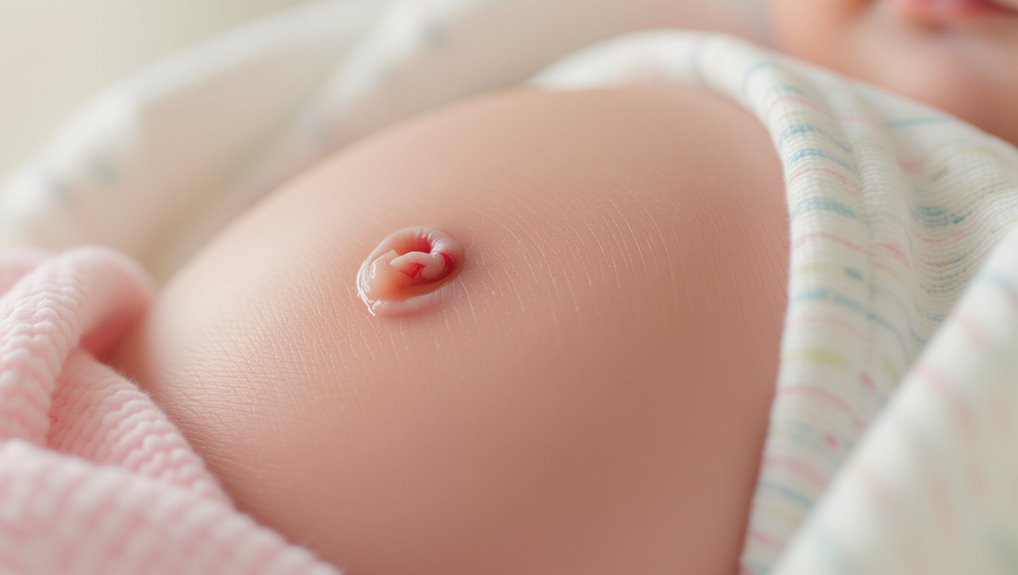

When caring for your newborn’s umbilical cord stump, keep it clean and dry to prevent infection and bleeding. It’s normal to see small amounts of clear discharge with some blood, but watch for persistent bleeding, increased redness, or unusual swelling. If you notice thick pus or your baby has a fever, contact a healthcare professional immediately. By following proper care tips, you can guarantee your baby’s well-being and discover more about common umbilical issues.
Key Takeaways
- Small amounts of clear, mucus-like discharge with blood are normal; monitor for changes after three days.
- Keep the umbilical stump clean and dry; allow for air circulation to promote healing.
- Contact a healthcare professional if persistent bleeding, redness, swelling, or foul smell occurs.
- Signs of infection include warmth, discharge, and fever; these require immediate medical attention.
- Monitor for umbilical granuloma or hernia; consult a doctor if issues worsen or persist.
Understanding the Umbilical Cord and Its Function
The umbilical cord is an essential lifeline that connects your newborn to the placenta, providing necessary nutrients and oxygen during pregnancy.
After birth, the cord’s clamping and cutting leave a small stump attached to your baby’s belly button, typically measuring 2 to 3 cm long. This stump no longer serves a function and will naturally dry out and detach within 1 to 3 weeks as healing occurs.
The umbilical cord consists of two arteries and one vein, ensuring oxygen-rich blood and nutrients reach your baby while removing waste.
Caring for the stump is important to prevent infection and support a healthy shift to life outside the womb. Understanding this process helps you nurture your newborn’s well-being.
Signs of Normal and Concerning Umbilical Bleeding

While it’s normal for some bleeding to occur from your newborn’s umbilical stump, knowing what to expect can help you manage any concerns.
Normal bleeding may be small amounts of clear, mucus-like secretions streaked with blood, especially during the separation process.
However, watch for signs of abnormal bleeding that may require medical attention:
- Persistent or worsening bleeding after three days
- Increased redness, warmth, swelling, or foul smell around the belly button
- Ongoing discomfort or pain when touching the area
If you notice any of these symptoms, don’t hesitate to contact your healthcare professional for guidance.
Being informed can help you guarantee your baby’s comfort and health during this delicate time.
Essential Care Tips for Your Baby’s Umbilical Cord Stump
Caring for your baby’s umbilical cord stump is essential to guarantee healing and prevent infection. Here are some tips to maintain proper umbilical cord hygiene during newborn care:
| Tip | Action | Notes |
|---|---|---|
| Keep it clean and dry | Allow air circulation | Fold diaper down to avoid contact |
| Clean discharge | Use a wet cotton swab, then pat dry | Avoid rubbing alcohol unless advised |
| Monitor for infection signs | Look for redness, swelling, warmth | Consult your doctor if symptoms arise |
Recognizing Signs of Infection in the Umbilical Area

Recognizing signs of infection in your baby’s umbilical area is essential for ensuring their health and safety.
Keep an eye out for these infection symptoms:
- Redness, warmth, and swelling around the umbilical area
- Continuous stickiness or discharge after the stump has fallen off
- Oozing thick, yellow fluid (pus)
If you notice any of these signs, it’s important to consult a healthcare professional for appropriate treatment options.
Additionally, a fever in your baby under three months, especially with other symptoms, warrants immediate medical attention.
Always monitor for unusual changes in color or texture of the stump, as these can indicate infection or healing issues.
Your vigilance plays a significant role in your baby’s well-being.
Common Issues Related to the Umbilical Cord and Belly Button

After monitoring for signs of infection in the umbilical area, it’s important to be aware of other common issues that can arise with the umbilical cord and belly button.
One concern is umbilical granuloma, characterized by moist red tissue at the stump site; this may require umbilical granuloma treatment if it oozes fluid.
Another issue is an umbilical hernia, which appears as a soft lump that bulges when your baby cries. While this often resolves on its own, proper umbilical hernia management is essential.
If you notice excessive bleeding or continuous discharge from the belly button, seek medical advice, as these could indicate complications.
Being informed helps you care for your newborn confidently.
Frequently Asked Questions
How Long Does Umbilical Cord Bleeding Typically Last?
Umbilical cord bleeding typically lasts less than three days. During this time, monitor your newborn’s health closely and guarantee proper umbilical cord care to minimize irritation and promote healing. Don’t hesitate to consult your pediatrician if concerns arise.
Can I Give My Baby a Bath With an Umbilical Cord Stump?
You can’t give your baby a full bath with an umbilical cord stump. Instead, opt for sponge baths to guarantee bath safety and proper cord care until the stump falls off completely.
What Should I Do if the Stump Smells Bad?
If the stump smells bad, clean it gently with mild soap and water, ensuring it dries thoroughly. Monitor for signs of infection, and contact your healthcare provider immediately if you notice persistent odor causes or other concerning symptoms.
Is It Normal for the Stump to Change Color?
Absolutely, it’s normal for the stump to change color during the healing process. Stump discoloration causes, like drying and exposure, indicate healthy healing, but keep an eye out for any persistent unusual signs.
When Should I Contact a Pediatrician About Umbilical Bleeding?
You should contact your pediatrician about umbilical bleeding if it worsens, persists beyond a few drops, or shows signs of infection. Pediatric advice guarantees your baby’s umbilical care is safe and effective, fostering peace of mind.
Conclusion
You’ve navigated the incredible journey of umbilical care like a seasoned pro! Remember, while a bit of bleeding can be normal, you’ve got the tools to differentiate between typical healing and potential issues. Keep a watchful eye for signs of infection, and don’t hesitate to seek help if needed. Your baby’s belly button may seem small, but with your attentive care, it’s destined to thrive and transform into a perfect little masterpiece!